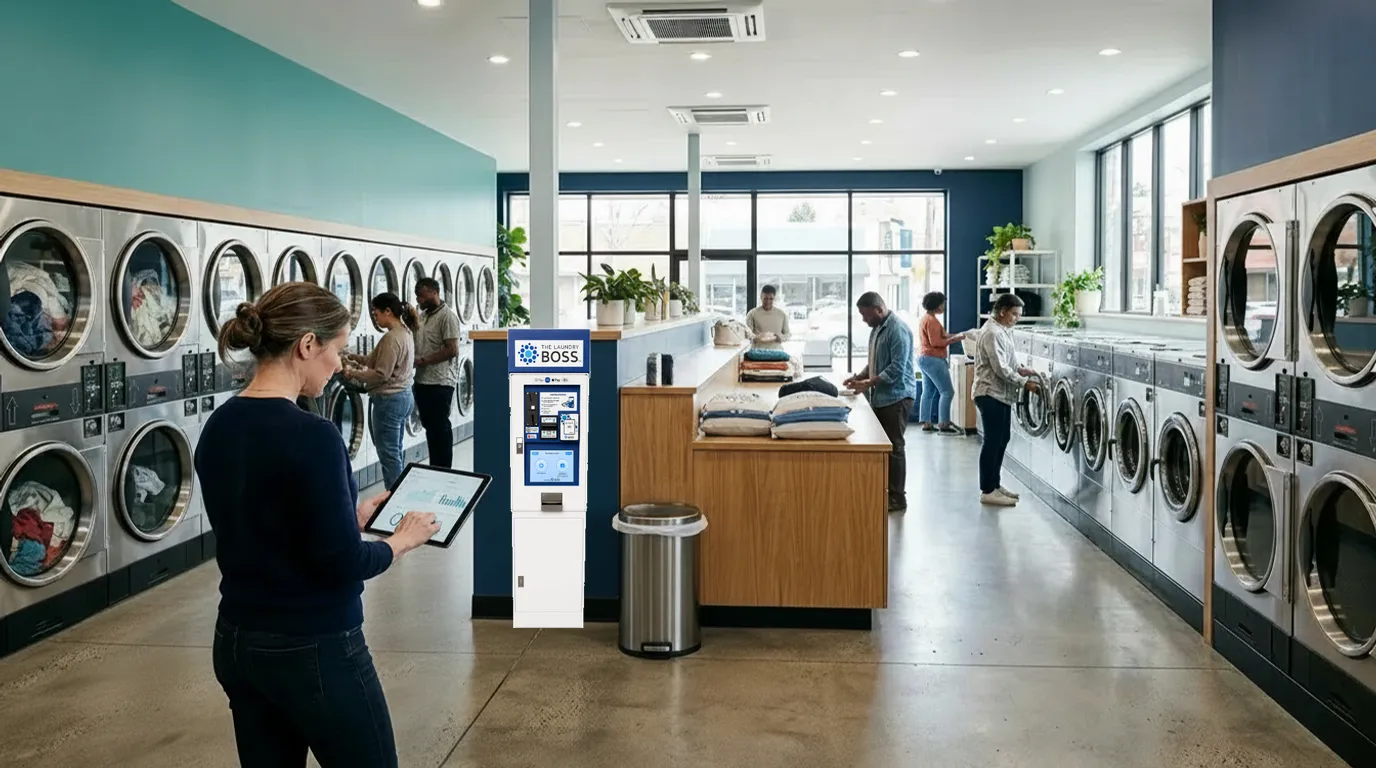
Modernizing your laundromat does not have to mean removing every coin slide overnight. For many stores, the smarter move is a gradual transition: keep the payment method your existing customers already know while introducing card, tap, mobile, or kiosk payments alongside it.
A hybrid rollout gives customers more choice while giving you time to learn how they actually prefer to pay. Instead of making one large change and hoping it works, you can use the first 90 days to introduce digital payments, watch customer behavior, make adjustments, and decide what makes sense for your store long term.
Why you don't have to choose between coin and digital
The payment conversation is often framed as coin versus cashless. In reality, many laundromats do not need to make an immediate either-or decision. Your regular customers may already be comfortable using coins. Some customers may prefer cash because it helps them manage a weekly budget. Others may walk into your store expecting to tap a card or pay with their phone. National data backs up both groups: in the Federal Reserve's 2025 Diary of Consumer Payment Choice (opens in a new tab), credit and debit cards made up 65% of consumer payments, yet nearly 80% of consumers still carry cash and most say they plan to keep using it.
Offering both gives customers another option without taking away the one they already use. For owners, a hybrid setup can also provide a lower-risk path toward modernization:
- Keep serving existing coin customers
- Add card and contactless options for customers who want them
- Learn which payment methods are actually being used
- Introduce digital tools without replacing everything at once
- Make future upgrade decisions based on real store behavior
Days 1-30: Add choice without creating confusion
The first month should be about making the new payment option easy to understand. You do not need customers to immediately stop using coins. You simply want them to know another option is available.
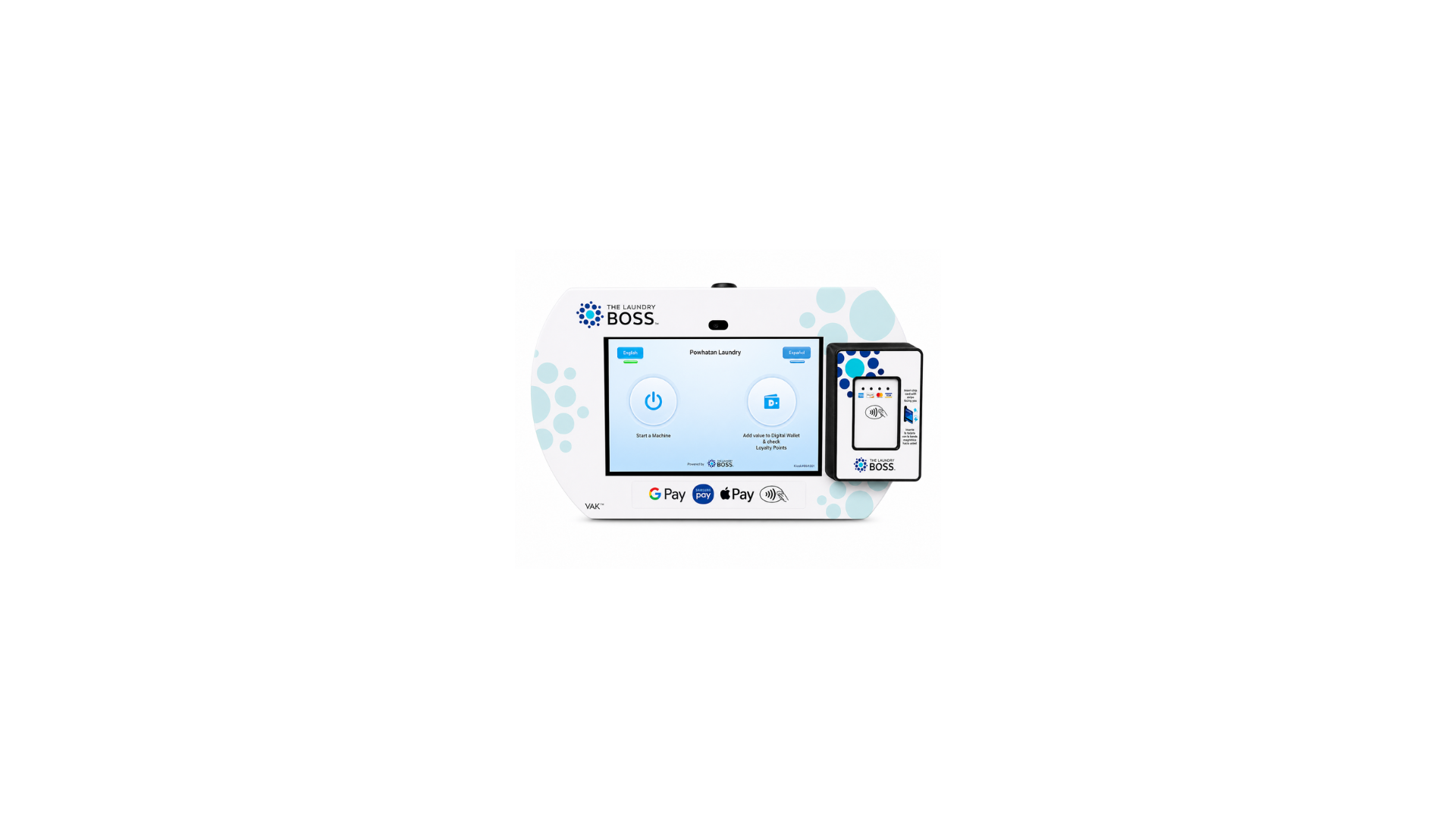
Start by making the payment choices obvious at the machine or kiosk. A customer should be able to walk into the store and understand how to start a machine without needing an attendant to explain it.
- Clearly label which payment methods are accepted
- Keep instructions short and visible
- Make card or tap payments easy to locate
- Test the experience yourself from a customer's perspective
- Train attendants to explain the new option in one or two sentences (the Attendant App keeps them equipped on the floor)
- Watch for repeated customer questions
Days 31-60: Watch how customers actually pay
Once customers have had time to become familiar with the new options, the second month is about behavior. Do not assume everyone will move to digital. Instead, look at the payment mix in your owner dashboard. The point is not to force one payment method to win. The goal is to understand what your customers prefer.
- What percentage of transactions still use coins?
- How quickly are card and tap payments growing?
- Are mobile payments being adopted?
- Are certain machines seeing more digital transactions than others?
- Are there differences between weekday and weekend customers?
- Are new customers using different payment methods than regulars?
Days 61-90: Decide what deserves more investment
After roughly two months of customer use, you should have a much clearer picture of what is working. The third month is when the data becomes useful for decisions.
If digital payments are growing quickly while coin usage remains strong, that may tell you the hybrid model itself is valuable. If digital payments dominate certain parts of the store, you may decide to expand those options to more machines. If customers continue to rely heavily on coins, there may be no immediate reason to remove them.
- Which payment options are customers actually choosing?
- Has payment-related friction decreased?
- Are customers spending differently when using digital payments?
- Has cash or coin handling decreased enough to save staff time?
- Are there machines that should receive additional payment hardware?
- Is the current payment mix helping or complicating operations?
Don't measure success only by digital adoption
One mistake owners can make is judging a payment upgrade only by asking: How many customers switched to card? That is only one part of the picture. A better rollout should also improve the customer experience and make the store easier to manage.
A customer continuing to use coins is not necessarily a failed conversion. If that customer stays loyal while another customer chooses tap-to-pay because you now support it, the additional payment choice is doing its job. Track these alongside adoption:
- Failed or abandoned transactions
- Customer payment questions
- Time spent handling and counting coins
- Refund requests
- Revenue visibility
- Repeat customer behavior
- Machine utilization
- Overall revenue
Use promotions carefully during the rollout
You can encourage customers to try a new payment method without making existing customers feel penalized. For example, you might introduce a limited promotion through a digital payment or loyalty program in your customer mobile app.
The important part is to use promotions as a way to help customers discover the new option, not simply discount every transaction. Keep the offer easy to understand, then measure what happens afterward.
When should you consider reducing coin dependence?
There is no universal deadline for going cashless. The decision should depend on your customers, location, and operating model. Signs it may be time to lean further into digital include:
- Coin collection is taking significant staff time
- Customers frequently ask for card or tap options
- Coin mechanisms require repeated service
- Cash handling creates security concerns
- Digital transactions consistently outpace coin usage
- You operate multiple locations and need better visibility into revenue
Even then, reducing coin dependence does not have to mean eliminating it immediately. Our ROI calculator can help you estimate what a bigger shift toward digital could be worth for your store.
The goal is payment flexibility, not change for the sake of change
A successful payment upgrade should make things easier for your customers and easier for you. If coins are still serving part of your customer base well, there may be no reason to remove them simply because newer technology exists. At the same time, customers who expect card, tap, or mobile payment should not have to leave your store because they do not have quarters. For more on the revenue impact, see how to increase laundromat revenue with card payments and how laundromats make money in 2026.
A 90-day hybrid rollout gives you the opportunity to introduce those options without guessing. Start with choice. Watch what customers do. Then use the data to decide what comes next.
How The Laundry Boss can support a hybrid payment strategy
The Laundry Boss is designed to give laundromat operators multiple ways to accept payment while connecting those transactions to the same management ecosystem. That means modernization does not necessarily require abandoning the equipment or payment habits already working in your store. Check our integrations to see which machine brands are supported.
- Coin and cash
- Credit and debit cards
- Contactless tap-to-pay
- Mobile app payments
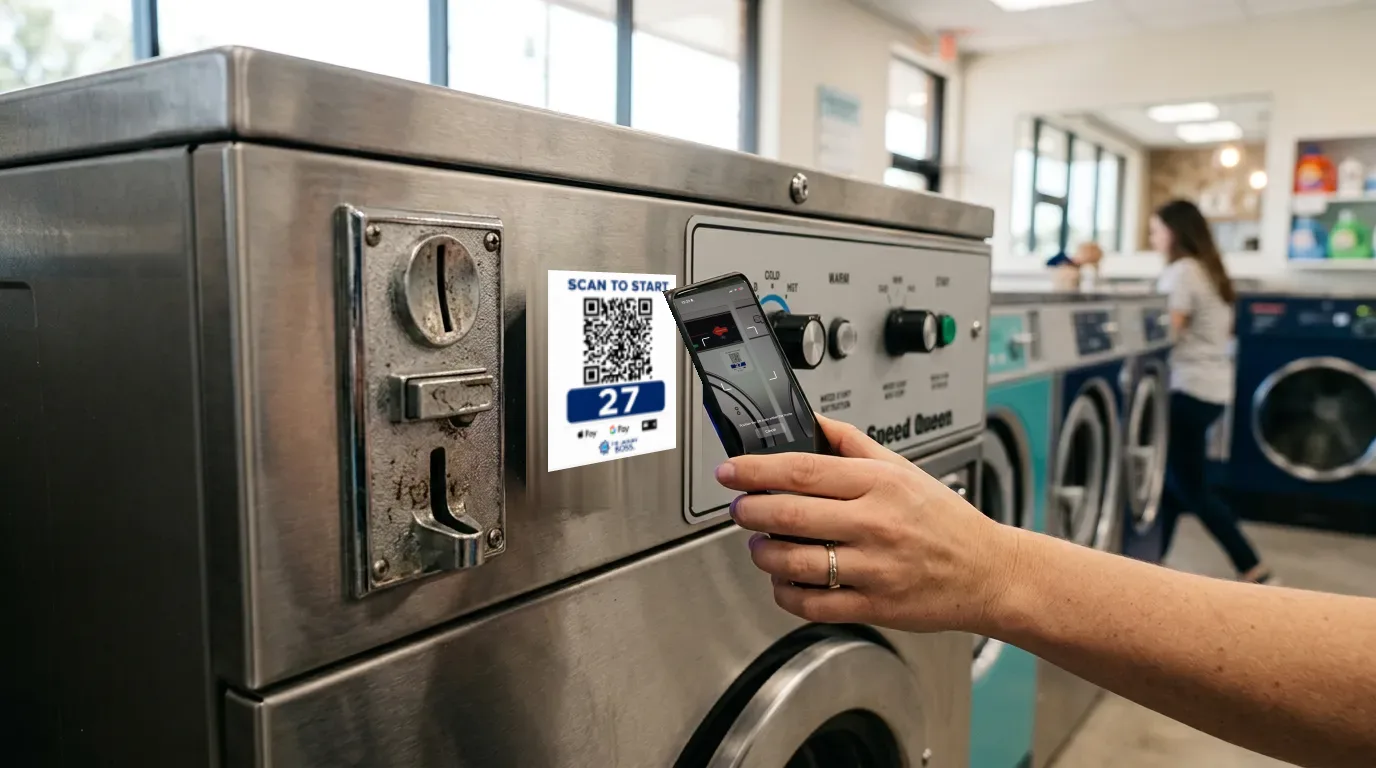
- QR-based payments
- Self-service kiosks
- POS transactions
- Real-time machine and revenue reporting
Sources and further reading
- Federal Reserve Financial Services: 2025 Diary of Consumer Payment Choice (opens in a new tab) — Annual research on how U.S. consumers use cash, cards, and mobile payments.